Before we cook — the short version
I’ve always had dogs, and in this family, giving them the best life we can is a priority — not an afterthought. A while back I decided to switch mine to raw, fresh food. I’ve made mistakes along the way (stick around; you’ll read about some of them), but the change I’ve seen in my pups has been so positive that there’s no going back.
There are two of them. Monday — the near-to-perfect one, a pretty mixed-breed girl, eleven years wise. And Brooklyn — a four-month-old basset hound with the personality of a diva and very, very tiny patience.
Everything here is cooked for them first. The humans just beg for the scraps.
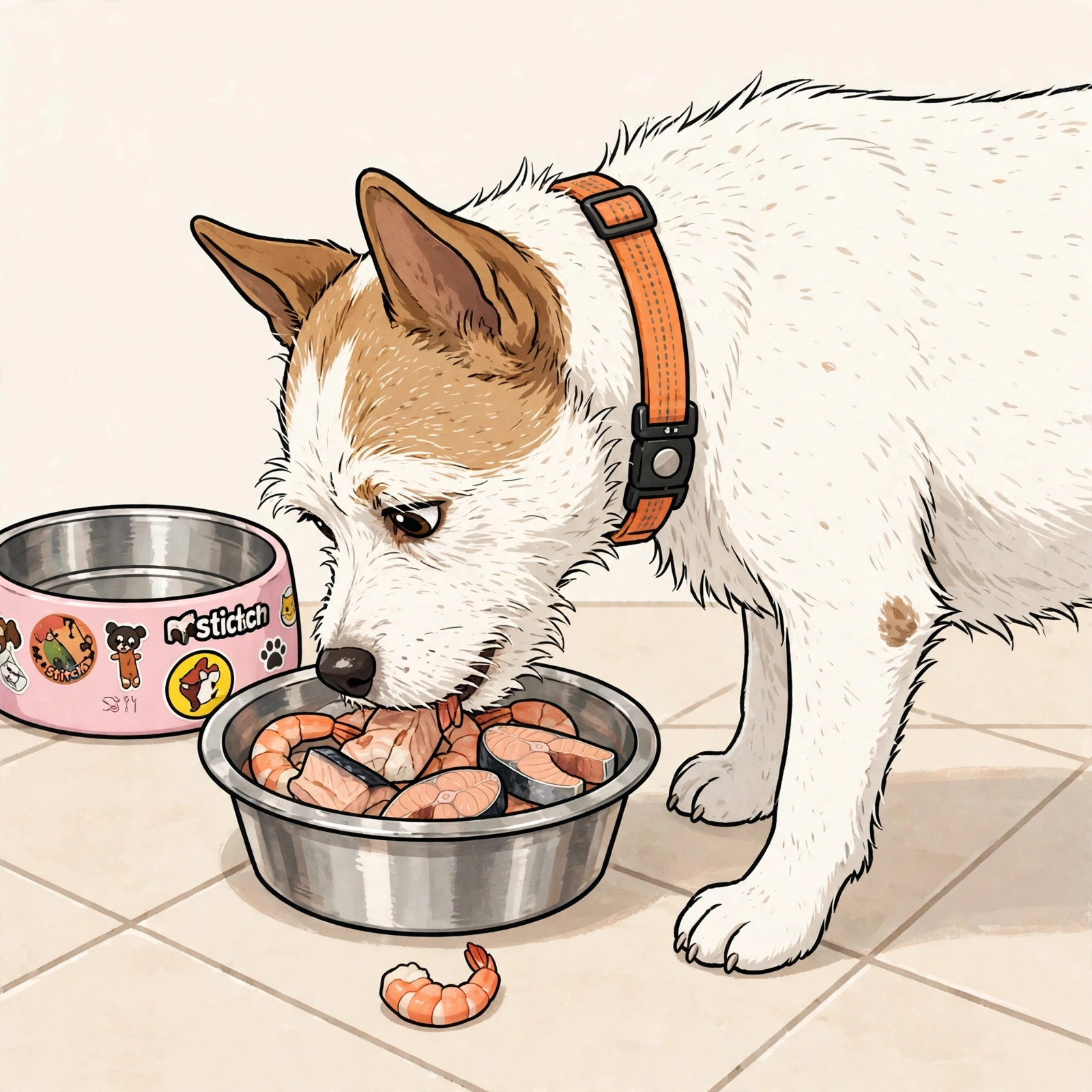
Short answer: yes. Fish is one of the best proteins you can put in a dog’s bowl — lean, easy to digest, and full of the omega-3 fats that keep a coat shiny and joints moving. The trick is in how you serve it. Here’s what I’ve learned cooking for my dogs, plus a simple shrimp-and-snapper recipe to try it with.
Why fish is good for dogs
- Omega-3s (EPA & DHA) — support skin, coat, joints, and the brain; especially valuable for seniors and growing puppies.
- Lean, complete protein — easy on the stomach, good for dogs that don’t tolerate chicken or beef well.
- Vitamin D, B12, and selenium — nutrients that are hard to get from muscle meat alone.
The rules that matter
Start with the dog, not the fish. Before anything raw with bones goes into a bowl, consider the size and the age of the dog in front of you. There are parts a large, experienced dog will eat with no problem at all — and other parts that, even though raw fish bones are soft and mild as bones go, will simply make a smaller, younger, or older dog uncomfortable. And an uncomfortable dog doesn’t push the food around politely. Dogs don’t wrap what they don’t like in a napkin: they drop it, shake it off, and leave it somewhere — and fish and shellfish are not the most discreet scents to discover around your house later. The sorting isn’t misbehavior; it’s the dog’s review system. Serve pieces matched to the dog, in a spot that’s easy to clean, and let the verdict come to you.
Mind the bones — and the spikes — then choose how the parts get served. Here’s the thing nobody tells you: the parts a dog sorts out of the bowl — the bones, the fins, the head, even the scales — are a nutrient vault, not garbage. Bones carry calcium and phosphorus in the balance a dog’s body actually wants, plus collagen in every joint and connective scrap. The skin and fins are collagen and omega-3s. The head holds some of the richest meat on the fish and nutrients you won’t find in a plain fillet. The trick is access: a large, experienced dog can work through many of these parts as they come, but a small dog or an elderly dog — the very dogs who may need those nutrients most — can’t chew their way in. That’s what a food processor is for. Run the cheap parts — heads, collars — through it, and it chops and grinds bone and spike down fine enough to serve safely, nutrients and all. And the economics make sense both ways: with a medium or large dog you optimize the expense and hunt the cost-effective cuts, collars and heads included; with a small dog, appetites are small too — one nice chunk of plain trout fillet can do the trick for a couple of days.
Cooked or raw, do it on purpose. Plain cooked fish is the safe default. If you feed raw fish, freezing it first (a week in a home freezer) is the standard way to kill parasites. Never serve fish that smells off or has been sitting around. And if raw still makes you nervous, there’s a ramp: boil a pot of water, drop the meat in for a couple of minutes, and take it out — barely cooked, most of the way to raw. Next time, a little less. Then a little less again, until you feel the dog is ready. In my experience, the dog is ready long before you are — normally, the one who has to get ready is the human.
Pick low-mercury fish for regular meals. Snapper, sardines, salmon, and most white fish are fine in rotation. The big predators — swordfish, shark, king mackerel — are off the menu entirely.
Plain only — people seasoning, that is. No salt, no garlic, no onion, no butter bath. But plain doesn’t mean nothing: a dog kitchen has its own spice rack, and every herb on it earns its place. Parsley and cilantro help the body clear heavy metals — and freshen the breath while they’re at it. Turmeric is the anti-inflammatory; joints and old dogs thank it. Cinnamon helps keep blood sugar steady. Cumin helps digestion, and dill does digestion and breath both a favor. Season like you mean it — just season from the dog’s list, not yours. And four things never enter a dog’s bowl at all: chocolate, grapes or raisins, macadamia nuts, and onions. Those aren’t seasoning rules; they’re poison rules.
Shrimp counts too — cooked, peeled, heads and shells off. Don’t throw the shells away, though: dried and ground, shrimp shells make a mineral-rich powder (calcium, plus the joint-friendly compounds in the shell) you can sprinkle over meals. The dehydrator earns its keep again.
The recipe: Shrimp & Red Snapper Collar Bowl
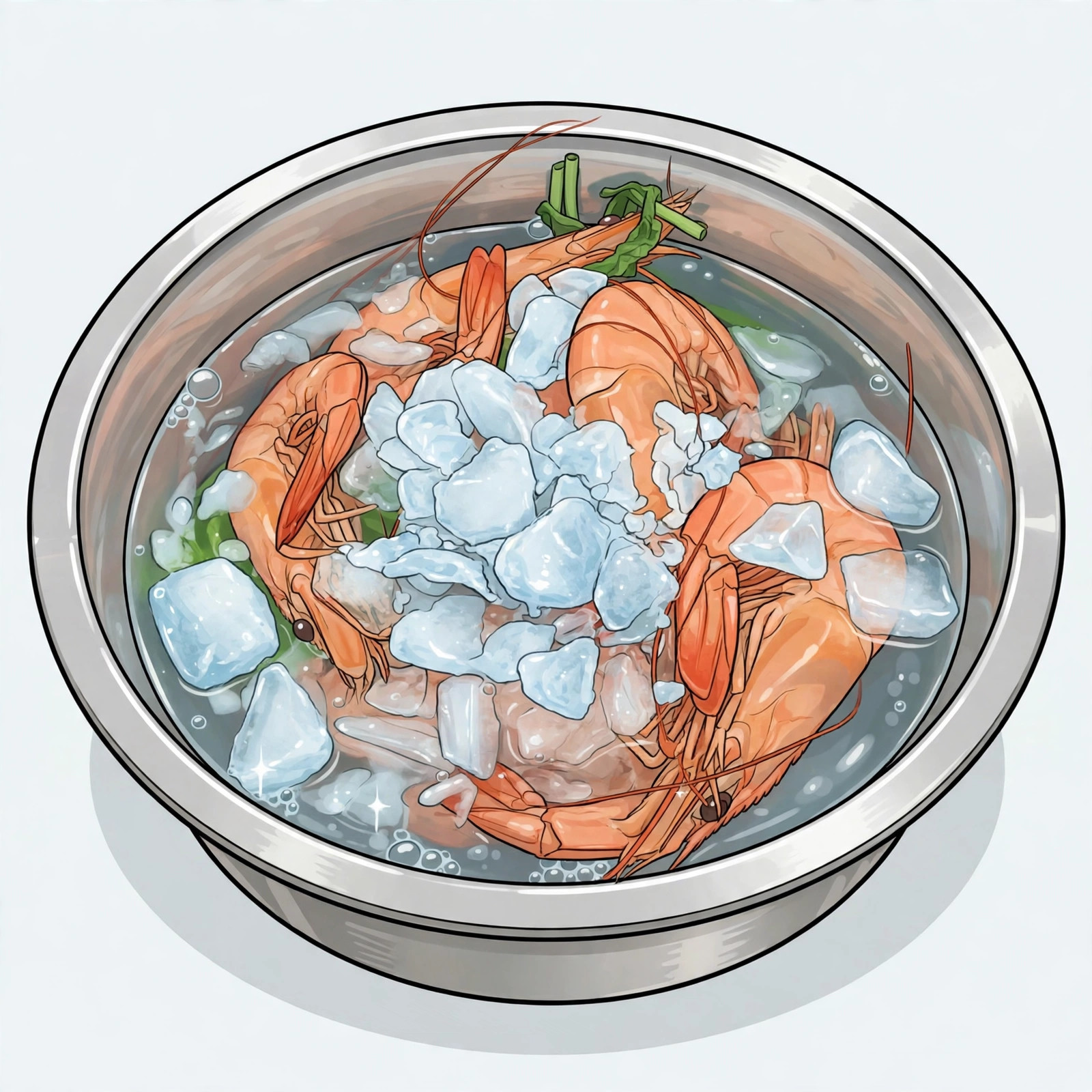
This started as a rescue mission — a pound of shrimp that had been in the freezer long enough to come out as one solid rock. Boiled, it became the base of a bowl built on red snapper collars, the cut everybody overlooks at the fish counter. Don’t let the low price fool you: the collar is one of the richest, most valuable cuts on the fish — the fatty meat around the neck that chefs quietly keep for themselves, full of good fat and collagen. On a dog’s bowl, that’s treasure.
Ingredients
- 1 lb shrimp, boiled plain
- ~1 lb fresh red snapper collars, cut up (raw, or lightly cooked if you prefer)
- A handful of horseradish leaves, wilted into the shrimp water at the end of the boil
- Lemon, squeezed over the top
- A drizzle of olive oil
How it goes
- Boil the shrimp in plain water.
- At the end, add the greens so they just wilt.
- Cut the snapper collars into pieces, checking for bones as you go.
- Mix the cooked shrimp and greens with the snapper.
- Portion by dog: small pieces for puppies and small dogs, bigger pieces for large adults.
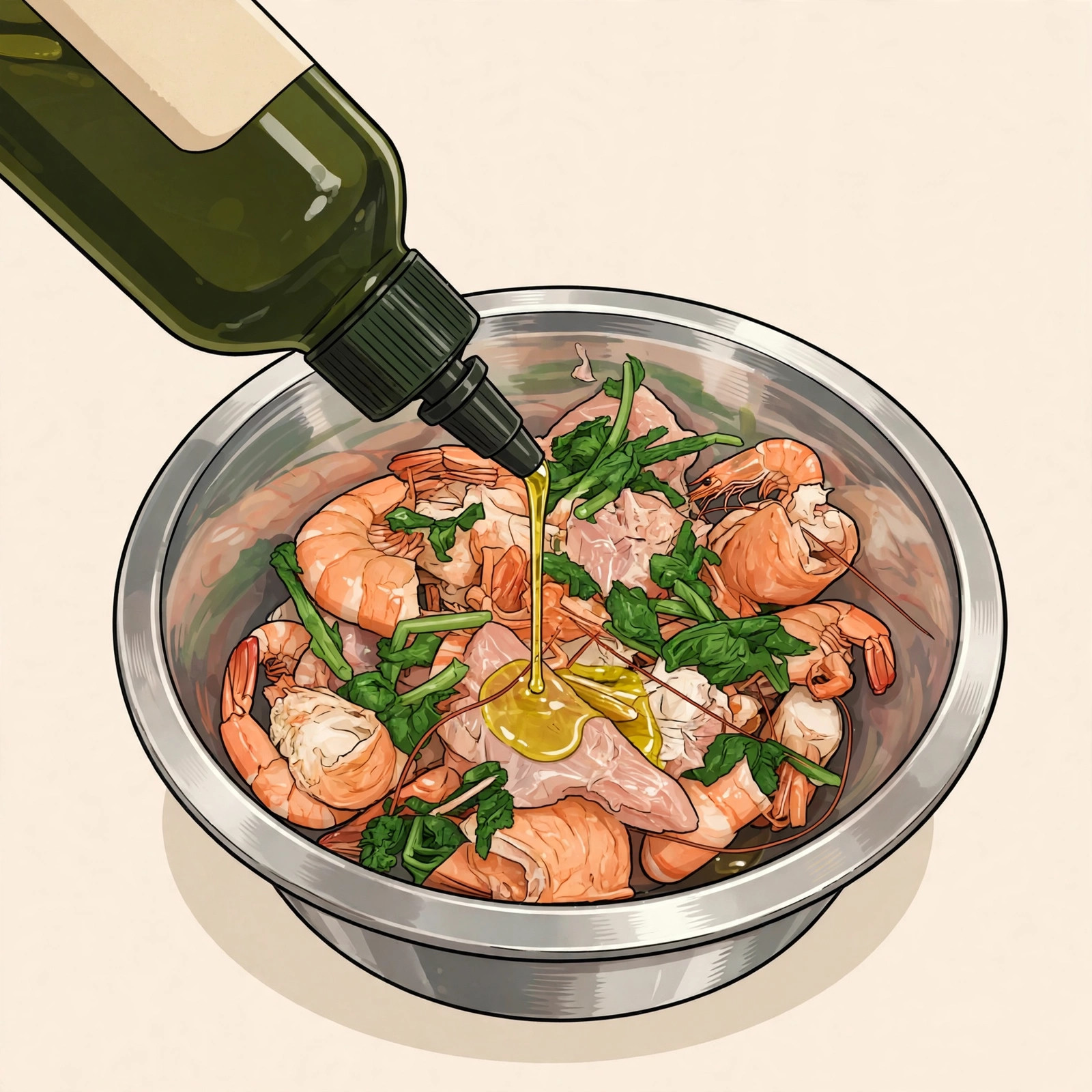
- Finish with lemon and a drizzle of olive oil, and serve.
The honest verdict: it was messy. The flavors were a hit, but the shrimp heads and the snapper collar bones were too spiky and hard to chew. My dogs sorted their bowls — carried the hard pieces out of their bowls, ate the soft parts, and looked at me like I’d skipped a step. They were right: I had.
The second act: don’t throw the bones out
Here’s how the same meal redeemed itself. I boiled the collars in the same water the shrimp had cooked in, picked the meat off once it was cooked, and served it back — eaten happily, no sorting. Raw was never the issue; both my dogs will eat raw fish gladly. It’s the chewing geometry they can’t use yet — an old dog won’t learn new tricks, and a puppy is too young for bone-work. Clean chunks are the whole secret.
Then the bones went back into that same pot for a longer boil, and out came a broth full of collagen and calcium — saved for another recipe of its own, coming soon. Fish, shrimp water, bones, broth: one pot, and a lesson I’ll actually remember.
A last word, before you cook
Everything in this series is my opinion, and my opinion is only what I’ve seen and experimented with in my own kitchen, with my own dogs. It isn’t veterinary law, and it isn’t a promise about your dog — because dogs, like people, can be allergic or sensitive to almost anything, and every dog is its own case.
So take what’s useful here, leave what isn’t, and when you try something new, watch your own dog. In the end, the only review that counts is the one happening at your bowl.
Human Cooking That Dogs Approve — Say hello: Instagram @alfetello